
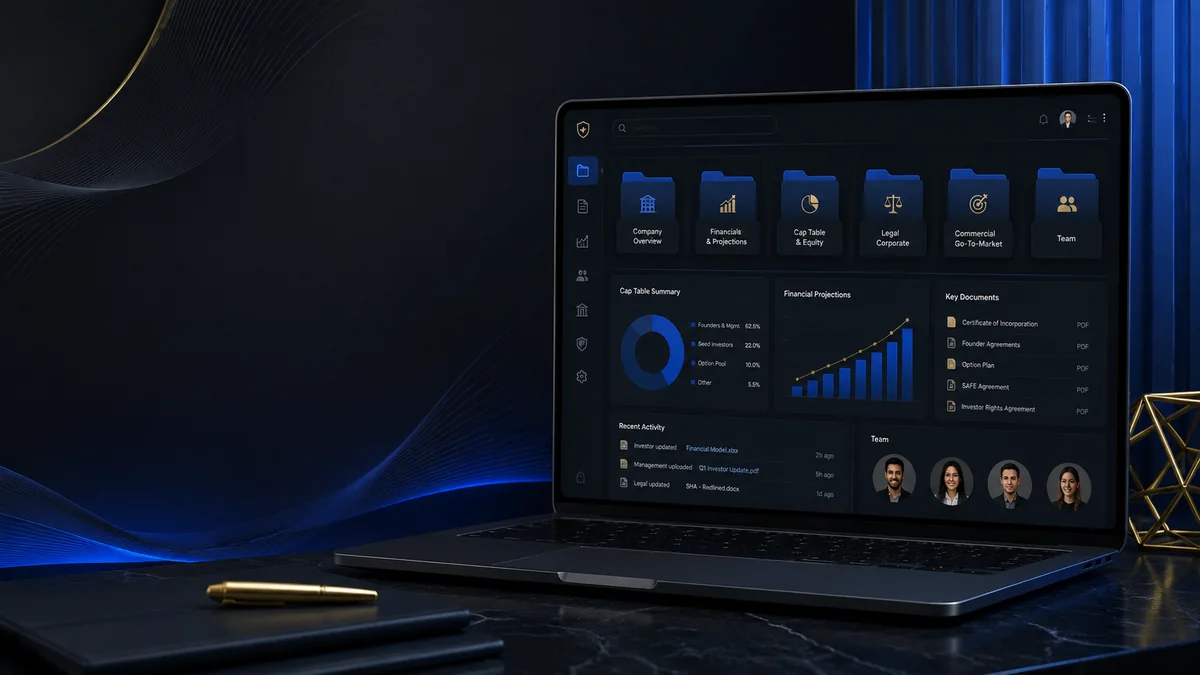
Why the data room matters
A data room is not only a document repository. It is a signal of founder discipline. When investors ask for information and receive scattered files, inconsistent numbers or missing legal records, confidence drops. A well-organised data room suggests that the founder is serious about governance.
Core folders
A seed-stage data room should usually include company incorporation and constitutional documents, founder agreements, cap table, current and historical financials, projections, tax and compliance records, customer and revenue evidence, product material, intellectual property details, team information, contracts, investor materials and use-of-funds assumptions.
Stage-appropriate depth
Seed-stage investors do not expect a mature-company data room. They do expect internal consistency. The deck, model, cap table, customer evidence and legal documents must tell the same story. Inconsistency creates unnecessary diligence friction.
XITIJ readiness checklist
XITIJ helps founders assemble data rooms that are easy to navigate and logically named. We also help identify gaps before an investor sees them. The aim is to shorten diligence cycles and prevent avoidable credibility loss.
Practical rule
If a document is likely to be requested after the first serious investor conversation, it should already exist in an organised folder before that conversation begins.
This article is for informational purposes only. It is not investment, legal, tax, accounting or financial advice. Any advisory engagement with XITIJ requires separate written agreement.